
We know that as we age, changes take place in our body, whether we like it or not. In reality, there are five key age milestones that we need to be aware in order to achieve our best, healthiest life. Let’s focus on the first two – our 20s and 30s.
How can you lead a healthier life in your 20s and 30s?
To help us understand these phases of life, Doctor of Physical Therapy (DPT) Tyler Kist, has provided his expert opinion in a set of Q & A’s. Kist has daily experience diagnosing, treating and helping improve patients’ movement and function in Southern California.
Listen up … this applies to everybody!
Are you in your 20s?
These are the most important health tips to live a healthier life.
“Diet, nutrition and recovery are the biggest components that are related to overall wellbeing and physical fitness,” Kist said.
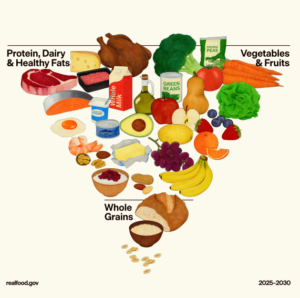
When it comes to nutrition, this means “the positive impact [that comes from consuming] whole foods, minimizing processed foods and how substantial that can change how a person will act and feel,” he explained.
Since “the food pyramid flipped,” his clients are now questioning if they have been doing it all wrong and how they need to change their diets to align better. Kist assures that the common theme in the food pyramid “has not changed – whole foods and vibrant colors” are the foundation.
Onto physical fitness now, while being in your 20s is full of change, work demands, perhaps starting a family, maintaining a consistent activity level really will pay off in the end.
What should exercise look like in your 20s?
Individuals “should strive to accomplish strength training 2 to 3x per week (about 60-120 minutes) and aerobic training 2 to 3x per week (120-180 minutes) for cardiovascular heart health,” Kist said.
Are you in your 30s?
This is when the biggest change happens.
“Metabolic function begins to show signs of decline and slowing down,” Kist said.
Even if you’re exercising the same and eating the same as you did in your 20s, “this is near the age where in today’s society the ‘dad bod’ comes into play.’” If you “continue to see a gain in weight, and ask ‘why’, Stanford University posted a recent study that shows there is a change in proteins that are in seen in our blood as to what may be a cause of this,” Kist explained.
For a better understanding on proteins and its function, Stanford Report explains as follows:
“Proteins are the molecular machines inside cells that perform all the duties necessary for life.”
“Layers of regulatory machinery govern how much of a certain protein is produced in a cell at any given time, and different kinds of cells contain distinct repertoires of proteins that coordinate what they do – a cardiac cell contains the protein machinery to produce a heartbeat, while a brain cell is equipped with proteins that allow it to fire,” it continued.
“Small decreases in the levels of these proteins can have major consequences on cellular behavior.”
We are so fortunate to have such remarkable research institutions and individuals striving to help our populations’ health.
“Small fluctuations in protein levels within cells can be the difference between health and disease or a drug molecule working or not, but it can be hard to detect these changes.”
How should you approach diet and exercise in your 30s?
“Whether your time allows for more activity and simply paying closer attention to what we consume becomes more important here,” Kist said.
Kist’s common advice for this age bracket?
“The biggest thing I try to preach is mobility” he said.
It can be so easy to ignore discomfort or put limitations on when something doesn’t feel ‘right.’
“I tend to prioritize strength because that is where weaknesses are evident,” Kist explained.
If you have questions or are experiencing new symptoms it’s always a good idea to seek out medical advice.
What steps are you going to take to improve your health at the age you are now? The time is now.
This website does not provide medical advice. No material on this site is intended to be a substitute for professional medical advice, diagnosis or treatment. It is for informational purposes only. Always seek the advice of a medical professional or other qualified health care provider on any health matter or question.